Implementing authentication
WS-Security supports a variety of security token types for authentication, such as username tokens, binary tokens, and custom tokens. Username tokens are used in basic authentication, whereas binary tokens (like x.509 and LTPA tokens) are used in more advanced forms of authentication. In this release of IBM® Integration Designer, the module deployment editor documentation describes how to implement basic authentication using username tokens.
About this task
- A library named Library that contains the WSDL files that are shared by the modules.
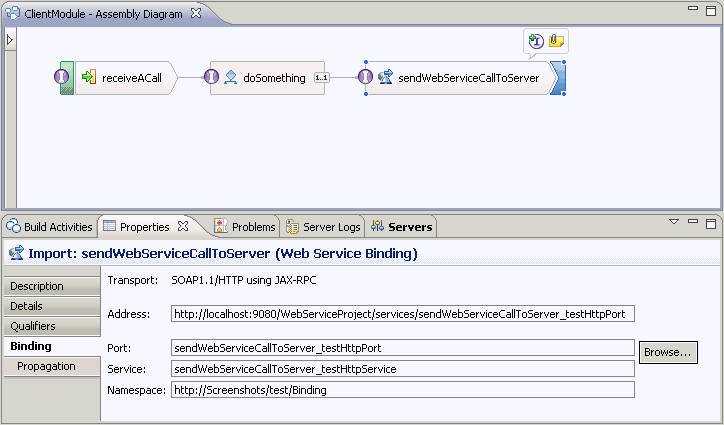
- A module named ClientModule that contains a web service
import named sendWebServiceCallToServer, as shown in the following
figure:
- A module named ServerModule that contains a web service
export named receiveWebServiceCallFromClient, as shown in the
following figure:
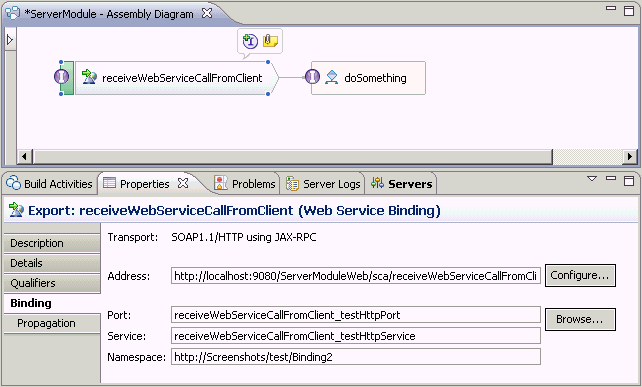
As the import and export names imply, the import sendWebServiceCallToServer sends a request message to the export receiveWebServiceCallFromClient at run time.
In basic authentication, username tokens are inserted in the request message of the import. There are typically no corresponding username tokens in the response message from the export.
The following topics describe how to implement basic authentication using a username token.